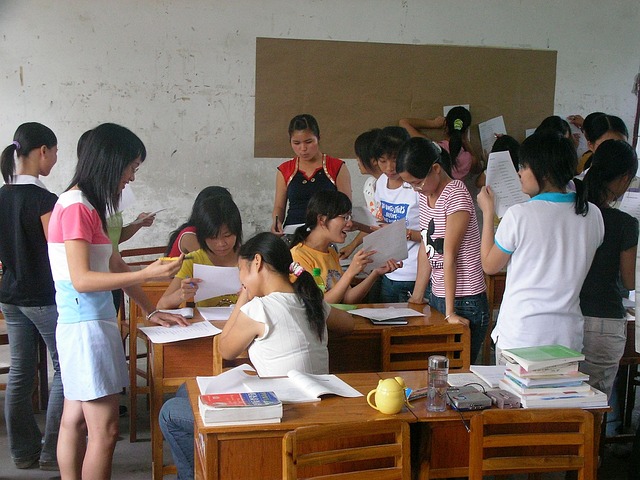
关于二战的英语主题班会?“天启:二战”英文版中涉及“大屠杀的起源”及“希特勒东进”的内容,主要聚焦于纳粹德国在二战期间对犹太人的系统性迫害与东线战场的军事行动。以下是具体分析:1. 大屠杀的起源:纳粹种族政策与迫害升级意识形态根源:纳粹政权将犹太人视为“劣等民族”和“德国问题的根源”,那么,关于二战的英语主题班会?一起来了解一下吧。
World War II, or the Second World War,[1] (often abbreviated WWII) was a global military conflict which involved a majority of the world's nations, including all of the great powers,[2] organized into two opposing military alliances: the Allies and the Axis. The war involved the mobilization of over 100 million military personnel, making it the most widespread war in history. In a state of "total war", the major participants placed their complete economic, industrial, and scientific capabilities at the service of the war effort, erasing the distinction between civilian and military resources. Over 70 million people, the majority of them civilians, were killed, making it the deadliest conflict in human history.[3]
The starting date of the war is generally held to be September 1939 with the German invasion of Poland and subsequent declarations of war on Germany by the United Kingdom, France and the British Dominions.[4][5] However, as a result of other events, many belligerents entered the war before or after this date, during a period which spanned from 1937 to 1941. Amongst these main events are the Marco Polo Bridge Incident, the start of Operation Barbarossa and the attack on Pearl Harbor and British and Netherlands colonies in South East Asia.
The Soviet Union and the United States emerged from the war as the world's leading superpowers. This set the stage for the Cold War, which lasted for the next 45 years. The United Nations was formed in the hope of preventing another such conflict. The self determination spawned by the war accelerated decolonization movements in Asia and Africa, while Western Europe itself began moving toward integration.
World War II (abbreviated WWII), also known as the Second World War, was the largest and deadliest war in world history. Lasting from 1939 until 1945, it saw the Allied Powers, led by the "Big Three" of Britain, the Soviet Union, and the United States, together with China, defeat the Axis Powers, led by Germany, Japan, and Italy. Numerous smaller powers were also involved.
Nazi Party leader Adolf Hitler put Germany on a war footing by forcing ever-increasing territorial demands on its neighbors. This led to all-out war in September 1939 when Germany invaded Poland and Britain and France declared war on Germany. In 1940, Germany conquered most of western Europe but failed to subdue Britain. In 1941, Germany invaded the Soviet Union, where massive battles went on continuously until the end of the war. Germany also implemented the "Final Solution", the systematic murder of Europe's Jews, Gypsies, and other minorities.
On the other side of world, Japan invaded China in 1937. China was an informal ally of the United States. In December 1941, Japan attacked the United States and Britain. After six months of successes, the Japanese were turned back at sea and finally succumbed to the United States, a much larger industrial power. The atomic bombings of Hiroshima and Nagasaki at the end of the war represent the only time that nuclear weapons have ever been used in warfare.
One of the key factors in that lead to an Allied victory was industrial production. The Allies built three times more weapons than the Axis powers and delivered more of them to the front lines. The war saw dramatic advances in weapons systems, especially regarding piston and jet airplanes, radar, rockets, sonar, proximity fuzes, and the atomic bomb.
Vast areas of Europe, eastern Asia and North Africa, as well as the oceans, became battlefields. Some 62 million people, or 2.5% of the world population, died in the war, though estimates vary greatly. About 60% of all casualties were civilians, who died as a result of disease, starvation, genocide (in particular, the Holocaust), massacres, and aerial bombing.
After World War II, Europe was informally split into Western and Soviet spheres of influence, which set the stage for the Cold War. There was a shift in power from Western Europe and the British Commonwealth to the two new superpowers, the United States and the Soviet Union. In Asia, the defeat of Japan led to its democratization. China's civil war continued, resulting in the establishment of the People's Republic of China. The former colonies of the European powers began their road to independence.
Introduction
On 1st September 1939 Germany invaded Poland. They used a new type of warfare called ‘Blitzkrieg’ or ‘Lightening War’. This is a war when tanks and planes are used to knock out the defences so that the defending country is easier to conquer. Two days after this happened; Britain and France declared war on Germany and the other Axis powers. It wasn’t until 7th December 1941, after a surprise attack by Japan, that destroyed most of America’s navy whilst it was still at Pearl Harbour that America joined the war to help Britain and France. Also in the war was the Soviet Union under the control of Stalin. On 6th June 1944 the Allies Invaded France in a massive attack and by 2nd September 1945 the Allies had won the war.
Turning Points
Dunkirk
The rapid defeat of the Allies in France in 1940 came as a great shock to many people, not least the British Expeditionary Force. The Germans forced the British troops out of Belgium. Most of the troops fell back onto the beaches of Dunkirk between May 29th and June 4th 1940. The Royal Navy did not have enough ships to risk a lone rescue so they called upon the British public for help. Anyone who had a vessel capable of sailing across the channel was asked to come forward to help Britain in her ‘hour of need’ There was a massive response. The Makeshift navy was called the “Skylark Navy”. All together it took 7 days to complete the evacuation. Because the operation had to be done with such speed, guns and heavy fortifications had to be left behind. This cost lots of money but saved lives. Even though the defeat in France was a disaster, the event of saving the British troops boosted moral and made people believe that the operation was a great British success. The soldiers that had been rescued from Dunkirk were bitter towards the Nazis and this proved useful during the D-Day landings.
Battle of Britain
Germanys invasion of Britain could not succeed if the Luftwaffe did not have supremacy in the air. On 14th August 1940 the Luftwaffe launched an attack on British Bomber Command. In two weeks of air fighting, one quarter of British pilots were killed or badly injured. For 53 nights they came every night. On 7th September 1940 the Luftwaffe started bombing Cities. This was a fatal mistake. It gave the RAF time to regroup, repair airfields and train new pilots. This is probably what cost Germany the war. On 15th September 1940 the German air force came by daylight. Also, at this time there was a lot of propaganda going on to boost British citizens moral. People were asked to donate scrap metal for new planes. This metal would just have been dumped though, because metal was plentiful, pilots were not. On many radio broadcasts it was reported that more German planes were shot down than actually were. In some cases three or four times as many. The Britain won the Battle of Britain for a few reasons; the Allied planes, Spitfire and Hurricane easily outmatched the Luftwaffe’s fighters. Also, the British pilots were highly trained and very efficient, they were ready to take of at a moments notice. At the height of the battle, they would be fighting practically all day. Just landing for fuel and ammunition.
Battle of the Atlantic
Because Britain is an island, her supplies mainly brought in from abroad. This meant that Hitler could cut off the supplies by bombing supply ships that were heading for British ports. Because Hitler had already gained control of most of the supply counties all he needed to do was to stop the Americans. He used a type of submarine called a U-boat. These were fairly heavily armed and could easily sink ships. To protect the ships from these, U-boats American ships would travel close together in convoys. American and British destroyers would surround these convoys, making it hard for U-boats to destroy and entire convoy and get home without damage. The battles were so frequent and hard to win that in 1941, 1299 allied ships were sunk (Six times as many as could be replaced). Only 87 German U-boats were sunk. To the Germans this was nothing. By July 1942 they were being launched at a rate of 30 per month. To cope with this new threat from U-boats, a new radar system was fitted to destroyers so that depth charges could be deployed in the correct area of sea. Radar systems were also fitted to planes so that they could seek-out and destroy U-boats whilst they were recharging their batteries. So that German U-boats could contact each other secretly, a new code was formed. This code was the Enigma code. Two Enigma machines were needed to encode and decode. This was very effective until one enigma machine and cipher documents were captured by the HMS Griffin, unharmed in May 1940. Thanks to this, the newly formed, ’convoy’ system of travel and the code-breakers of Bletchley park, the German U-boats were no longer as good a weapon as they were at the start of the war
D-Day
On 6th June 6,500 vessels landed over 130,000 men on five Normandy beaches: Utah, Omaha, Gold, Juno and Sword. 12,000 aircraft ensured air superiority. They bombed German defences and provided cover. On Utah beach 23,000 troops were landed at a cost of 197 casualties. However, on Omaha beach the landing was significantly harder, meeting with fierce German resistance, there were 4,649 American casualties. Overall, however, the landings caught the Germans by surprise and they were unable to counter-attack with the necessary speed and strength. Once the allied troops had destroyed the German defences they were free to bring new troops, machines and supplies over the channel and into Normandy. By the end of June, Eisenhower had 850,000 men and 150,000 vehicles ashore in Normandy. Fuel would have been a major problem for the allies, but thanks to the idea of piping oil straight from America, a pipeline had been built under the Atlantic Ocean. This was hard to destroy and so it was a success.In the weeks following the landings however, the narrow lanes and thick hedgerows of the French countryside slowed Allied progress considerably. Never the less in August Paris was liberated.
Evacuation
Due to the threat of war in 1939, women, children and old people were moved out of high-risk areas of Britain such as industrial areas and areas with a high population. In 1939 approximately 1,125,000 people were evacuated. This was a precaution and was not necessary. No direct action was taken against Britain by Germany. Most of the evacuees were transported back to their homes. However in August 1940, the war took a turn for the worse. The number evacuees rose to about 1,300,000. Life for evacuees was difficult. Most lived with people who didn’t understand them. Some got to live with rich people and had a nice few years but most didn’t. They were separated from their parents, not knowing if they were dead or alive. Many Mothers, children had diseases such as Vermin or Scabies, (see source). The evacuees where chosen by families, like at an auction. Each evacuee had a label saying where they were from and what medical conditions they had. This was horrible for most and “I'll take that one” became etched on the memory of our evacuees.
Second World War (World War II, referred to as World War II). September 1, 1939 -1 945 years on August 15, to Germany, Italy, Japan and France Axis (and Finland, Hungary, Romania and other countries) as a party to the anti-fascist alliance and the world anti-fascist forces, on the other for the second time on a global scale war. From Europe to Asia, from the Atlantic to the Pacific, there have been 61 countries and regions, more than 2.0 billion population is involved in the war, combat regional area of 2200 square km. According to incomplete statistics, war, soldiers and civilians were killed or injured more than 9,000 million people, 4 more than one trillion U.S. dollars down the drain.
End of World War II the United States, Soviet Union, China, Britain and other countries and peoples of the world anti-fascist victory over the fascist invaders win the world peace and progress to an end.
The Second World War, which broke out in 1939, had caused great damage to the world. Over 60 countries were involved ,and over 55000000 people lost their lives. The pain of that memory would probably last a long time. It's lucky that we didn't experience the tragedy. We all expect a peaceful world with no wars.
以上就是关于二战的英语主题班会的全部内容,纪念反法西斯主题班会内容通常涵盖历史教育、活动实践与精神传承三个核心板块,具体设计如下:一、班会开场:历史警示与和平教育通过数据与影像资料呈现法西斯主义造成的灾难,如二战期间全球约7000万人死亡、纳粹德国对600万犹太人的系统性屠杀、日本在南京实施30万人以上规模的大屠杀等,强调和平的脆弱性与珍贵性。内容来源于互联网,信息真伪需自行辨别。如有侵权请联系删除。